

The revolution in materials: LíoFlex
A fully biobased, circular and biodegradable material platform designed as an alternative to conventional plastics. Developed to significantly reduce environmental impact.
Plastic is a thing of the past.
WHAT DO WE SELL?
A proprietary material formulation and process to create a fully biobased, biodegradable, recyclable and water-soluble material, designed as a replacement for conventional plastics. The material is engineered to achieve comparable mechanical properties to many petroleum-based plastics, including heat resistance up to elevated temperatures.
The formulation consists of a specific combination of natural raw materials. By varying compositions, different material properties can be achieved.
An optional additive, LíoFlex++, can be used to enable controlled solubility in water, depending on the intended application and end-of-life scenario.
From vision to revolution: The initiators of LíoFlex
Two Dutch minds. One material concept. A new global standard for sustainable plastics.
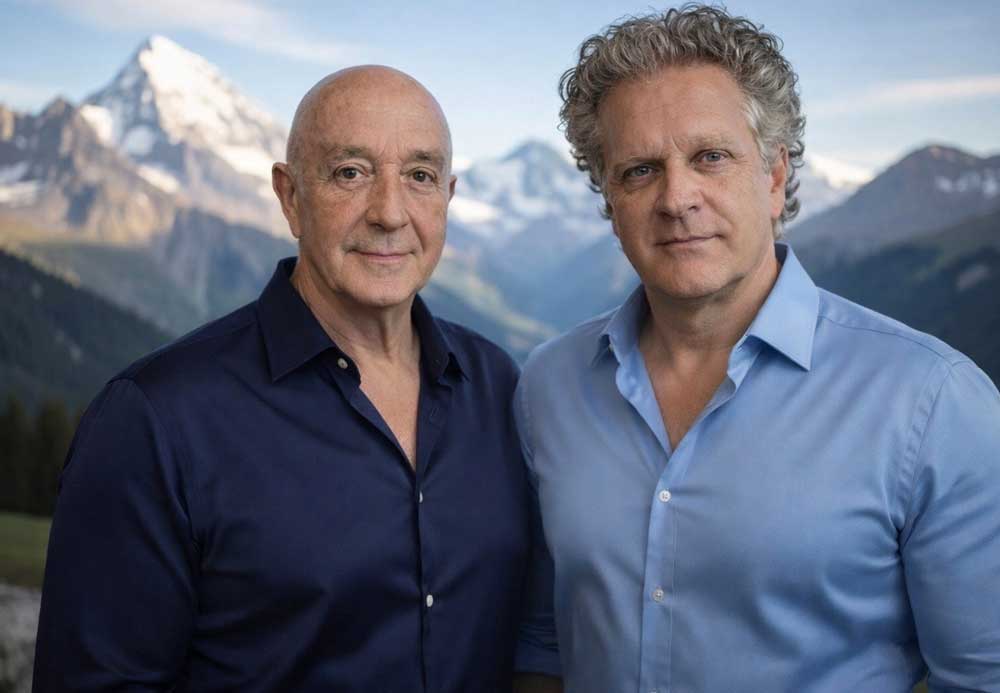
LíoFlex was born from the conviction that the world does not need yet another “slightly better” plastic, but a fundamentally different material altogether.
Alexander Rademakers (64) and Martin Cornelissen (57), both originally from the Netherlands and long-time residents of Switzerland, bring decades of international experience in trade, market development, and industrial applications. Throughout their careers, they witnessed firsthand how deeply the world has become dependent on conventional plastics—and how limited the existing solutions are when it comes to truly breaking that dependency.
Rather than settling for compromises or incremental improvements, they chose to address the problem at its core. Together with a specialized biotechnologist, they developed LíoFlex: a bio-based material concept designed to fully replace conventional plastics—without sacrificing performance, scalability, or economic viability.
For the initiators, LíoFlex is not a theoretical experiment, but a practical industrial solution. Every aspect of the material has been developed with real-world application in mind—from production and processing to performance and cost efficiency. Sustainability is not an afterthought, but an integral part of the design.
LíoFlex embodies their shared vision: that technological progress and responsibility for the planet can go hand in hand. That true innovation does not come from minor adjustments, but from the courage to fundamentally change existing systems.
With LíoFlex, Alexander and Martin aim to contribute to a structural shift in how materials are created, used, and valued—creating a lasting positive impact for generations to come.
WHAT IS LíoFlex?
LíoFlex is a biobased material platform designed as an alternative to traditional plastics.
It is developed from natural raw materials, without oil-based inputs or intentionally added harmful chemicals.
Depending on formulation and application, LíoFlex materials can be biodegradable, recyclable and/or water-soluble. After use, the material is designed to either be reused, recycled or returned to natural cycles under controlled conditions.
LíoFlex is a polymer-based environmental compound with adjustable processing and degradation characteristics, allowing tailoring to specific use cases.
Biodegradable, circular and water-soluble
Tons of plastic produced annually
Tons of plastic waste enter nature and oceans each year
The process of LioFlex
How does it work?
Natural raw materials are combined in controlled ratios to create materials with plastic-like properties, available in different thicknesses and hardness levels. By incorporating LíoFlex++, controlled solubility can be enabled.
The dissolution process and residual materials depend on formulation and environmental conditions. Residual components are designed to be reusable where applicable.
What is applicable?
LíoFlex is designed as a versatile material platform.
Potential applications include furniture, household items, office products, industrial components and selected automotive and construction-related uses.
Final suitability depends on formulation, regulatory requirements and application-specific testing.
Revolution
WHY IS LíoFlex REVOLUTIONARY?
Designed to replace a wide range of conventional plastics - from packaging to technical applications
Biobased and biodegradable under defined conditions
Developed with circular design principles in mind
Strong, versatile and aesthetically flexible
Heat-resistant up to approximately 120 °C, depending on formulation
LíoFlex aims to contribute to environmental protection, human health and a more sustainable economy.
When in contact with water, certain LíoFlex formulations can break down into their original components, which may be processed by naturally occurring microorganisms.
This design approach aims to reduce the formation of micro- and nanoplastics compared to conventional plastics.
In short, good for the environment, our nature and health. Our future. And ultimately also for the economy!
GLOBAL IMPACT OF PLASTIC POLLUTION
Waste in the ocean has become one of the most critical environmental challenges of our time.
With over 460 million tons of plastic produced annually (2024) and an estimated 20 million tons entering the environment each year, the scale of the problem continues to grow. Marine ecosystems, coral reefs and the global food chain are increasingly affected.
LíoFlex is developed as part of the broader transition toward circular materials and reduced plastic pollution. Systemic change requires collaboration between governments, industry and consumers.
FAQ
Questions and answers about the product:
What is the tensile strength of the material?
Based on current internal measurements, tensile strength ranges approximately between 560–710 kg/cm², depending on formulation.
What is the E-modulus?
The E-modulus is approximately 1.6–1.8, indicating material stretchability.
What is the elongation at break?
1.6 to 1.8 times the magnification of the material.
Chemical resistance?
The material shows resistance to various common substances, including fuels and solvents, depending on formulation. Water enables dissolution for formulations designed to be water-soluble.
UV-resistance?
No experiments have been carried out yet regarding UV resistance, Further research and formulation with UV absorbers is possible.
Colors?
The material can be produced in a wide range of colors, both opaque and transparent.
Density?
Depending on formulation, density ranges between approximately 1.05–1.20 g/cm³.
Processing temperature?
Processing temperatures are up to approximately 120 °C, depending on formulation and desired properties.
Thermoplastic or thermosetting?
The material is thermoplastic and can be reprocessed multiple times under suitable conditions.
Processing methods?
Primarily suitable for extrusion.
Injection molding and other methods require further testing and validation.
Degradation in nature?
Certain formulations are designed to degrade in natural environments under defined conditions and are composed of non-toxic ingredients.
Is sample material available?
Yes, sample material can be produced upon request.
"Imagine a world without plastic waste. No pollution. No microplastics. Only natural materials that move with the planet instead of burdening it. That future starts today — with LíoFlex."
CONTACT US
Do you want to contribute to the development and commercialization of a next-generation sustainable material?
LíoFlex represents a commitment to innovation, responsibility and a more liveable world.
For today – and for future generations.
Do you want to seize this opportunity and make a big impact?
Switch to LíoFlex – and be part of the revolution!
“Children cannot choose which planet they will live on. It is our responsibility to ensure that we leave them the best possible environment.”
“Material properties, performance and environmental behavior depend on formulation, application and testing conditions. LíoFlex continues to develop and validate its materials in collaboration with partners.”
Website door versID Communicatie | powered by RODS